


The concept of Google's EEAT is a cornerstone in PQ (Page Quality) evaluation, essential for improving your website's search engine ranking and gaining the trust of your visitors. E-E-A-T is not a direct Google ranking factor, it's a framework used in Google's Search Quality Rater Guidelines to evaluate content quality. Google's ranking systems use many signals that help identify content demonstrating Experience, Expertise, Authoritativeness, and Trustworthiness.
Whether you're a blogger, entrepreneur, or content creator, you must apply EEAT principles if you want to succeed online.
Meaning of E-E-A-T and how it affects your site's reliability
The concept of E-E-A-T, an acronym for Experience, Expertise, Authoritativeness, and Trust - Experience, Expertise, Authoritativeness, and Trustworthiness, is one of the cornerstones contained in Google's guidelines for determining the quality and reliability of a website.
In essence, “E-E-A-T assesses whether a web page's content is created by experts in their field, if the information provided is accurate and reliable, and if the site itself is an authoritative source on” the topic covered:
- Experience (Experience): The content must be created by people who have proven practical or personal experience on the topic. For example, think about whether you would consider a product review more reliable from someone who has personally used it, or a review from someone who has never had direct experience with the product?! The answer is obvious.
- Expertise (Expertise): This relates to the level of knowledge or skill in a particular field. To be considered competent, the content creator must demonstrate the necessary qualifications or in-depth knowledge of the topic. Who would you pay attention to for dental health advice, a dentist with years of experience, or a person without medical training?
- Authoritativeness (Authoritativeness): Authoritativeness measures how much a content creator or website is recognized as an authoritative reference in their field. One becomes authoritative through external recognition, citations from other authoritative sources, awards, or positive reviews. For example, the State Police website page dedicated to passport renewal represents the unique, official, and authoritative source for all information on passport renewal.
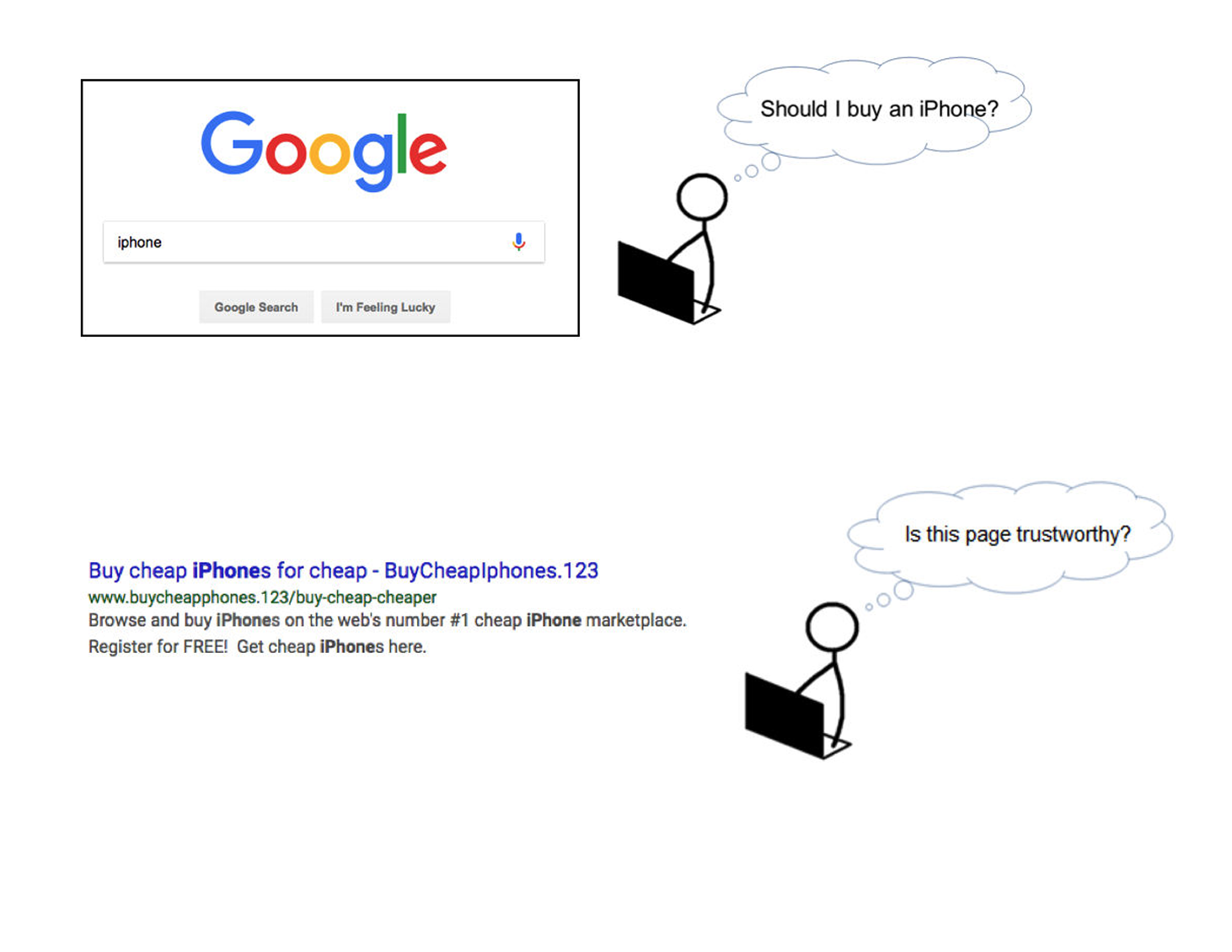
- Trustworthiness (Trust): Trust is the foundation of E-E-A-T. According to Google's guidance, content that lacks trustworthiness will have low E-E-A-T regardless of how much expertise, experience, or authority it appears to have. Trust is built through accuracy, transparency, security, clear sourcing, honest business practices, and reliable information. Online stores must guarantee secure payment systems and reliable customer service. Product reviews should be sincere and guide others in making purchases, rather than solely aiming to promote the product. Informational pages on YMYL topics (Your Money or Your Life) must be accurate to avoid potential harm to individuals and society. Regarding social media posts on non-YMYL topics, a high degree of trustworthiness is not always necessary, especially when the post aims to entertain the audience and presents no safety or health risks.
For Google, a site with a high level of E-E-A-T is more likely to rank better in search results, as it provides quality, useful, and reliable content.
This is particularly true for so-called YMYL (Your Money or Your Life) topics, which concern health, finance, and other areas of great impact on people's lives. Imagine a website promoting a miracle weight loss product, but all the information provided is misleading and not supported by reliable scientific evidence.
Even if the website creator claims to be an expert in the field, the lack of trust in the claims makes the site unreliable and negatively affects its overall E-E-A-T.
When did E-A-T (Expertise, Authoritativeness, and Trustworthiness) evolve into E-E-A-T with “the addition of” Experience?
The evolution from E-A-T to E-E-A-T or Double E-A-T, occurred in December 2022. Big G, during those days, informed us industry professionals on Google Search Central, an invaluable source for those involved in SEO and web marketing.
The original concept of E-A-T was first introduced in Google's quality raters Guidelines (quality raters) in 2014 and has since gained increasing importance. Google continues to update its Search Quality Rater Guidelines regularly. Significant updates were released in March 2024 and January 2025, including expanded guidance on spam, deceptive practices, content quality, and trust evaluation.
E-E-A-T stands for Experience, Expertise, Authoritativeness, and Trustworthiness. This evolution reflects Google's growing focus on the “importance of” direct and real-life experience in the context of a web page's topic.
In addition to expertise, “authoritativeness, and” trustworthiness, particular relevance is now given to the “personal experience of the content creator in relation to the” topic addressed, as a key factor in evaluating the quality of a website in its search algorithms.
How do Google quality raters evaluate the E-E-A-T of websites and eCommerce sites?
When Google quality raters evaluate page quality, the E-E-A-T analysis is based on the following aspects, as reported in the updated guidelines:
- They begin by examining the “About Us” section on the website, or the content creator's profile page. The question they ask is whether the information gives the website or content creator a degree of credibility worth rewarding.
- They search for independent reviews, citations, articles, and other authoritative sources that discuss the website or content creators. Is there an independent and reliable consensus on the expertise, “authoritativeness, or” trustworthiness of the website or content creator? Are there credible signals suggesting otherwise, namely that the website or content creator is not trustworthy?
- In some cases, they assess the level of experience and expertise by directly observing the main content of the page and analyzing sections such as reviews and comments. For example, in the case of hair-related content, they determine if there are experts in the field of hairstyling, perhaps by watching a video where they demonstrate their skills (e.g., styling hair) and reading comments from other users.
The website or content creator does not represent a reliable source if there is an obvious conflict of interest. For example, product reviews on an eCommerce site from people who actually own the product and share their experiences are extremely valuable and credible.
On the contrary, reviews provided by the product manufacturer (Our product is extraordinary!) or reviews from an influencer paid to promote the product do not enjoy the same degree of reliability, as they are influenced by a conflict of interest that compromises their objectivity.
E-E-A-T in the age of AI search and AI-generated content
As AI-powered search experiences continue to evolve, E-E-A-T has become more important than ever for websites seeking sustainable organic visibility. Search engines are increasingly focused on identifying content that demonstrates genuine experience, subject-matter expertise, authority, and trustworthiness, regardless of whether it was created by humans, AI tools, or a combination of both. Google's guidance makes it clear that the method of content creation is less important than the value delivered to users.
In an environment where AI can generate large volumes of content within seconds, originality and credibility have become key differentiators. Websites that simply publish generic AI-generated text without expert review, fact-checking, or unique insights may struggle to earn visibility in both traditional search results and AI-generated answers. On the other hand, content that combines AI efficiency with first-hand experience, expert knowledge, original research, case studies, and transparent authorship is more likely to be considered valuable and trustworthy.
The rise of AI search features, such as AI-generated summaries and conversational search results, has also increased the importance of demonstrating clear E-E-A-T signals across an entire website. Businesses should focus on showcasing author credentials, citing reputable sources, publishing accurate and up-to-date information, and providing real-world insights that cannot be easily replicated by automated tools. By prioritizing quality, transparency, and user value, organizations can strengthen their authority, build trust with their audience, and improve their chances of being featured in both search engine rankings and AI-powered search experiences.
Why is E-E-A-T important for online visibility and SEO?
E-E-A-T improves online visibility and SEO (Search Engine Optimization) for several reasons:
- Content quality evaluation: Google uses E-E-A-T as one of the main criteria to assess the quality of a web page's content. Pages with high levels of E-E-A-T achieve higher rankings in search results, as they are seen as more helpful, reliable, and authoritative for users.
- Improving credibility and “reliability:” a high level of E-E-A-T increases the credibility and reliability of a website in the eyes of users and search engines. This is particularly important for sites dealing with YMYL (Your Money or Your Life) topics, where inaccurate information can have a significant impact on people's lives.
- Personal experience and reputation: “the inclusion of” Experience in E-E-A-T emphasizes “the importance of” the content creator's personal and direct experience. This aspect is crucial in cases where personal testimony adds value to the content, such as in product reviews or travel blogs.
- Responding to search intent: pages with high E-E-A-T are better equipped to respond to users' search intentions and provide accurate and reliable answers. They improve “the user” experience and satisfaction, factors that Google considers in ranking pages.
- Building “Domain Authority (DA):” websites that demonstrate high E-E-A-T can build stronger domain authority in their field. This translates into better opportunities for quality backlinks and recognition from other authoritative sites, key factors in SEO.
- Penalty prevention: following E-E-A-T guidelines helps avoid low-quality content that could lead to penalties from search engines, negatively affecting online visibility.
Implementing E-E-A-T practices not only improves SEO but also contributes to building a solid online reputation!
Practical tips to improve your website's E-E-A-T
1. Improve user experience with a user-friendly site
Ensure that your site is intuitive to navigate, with a clear structure and well-organized menus. Additionally, work on the loading speed of pages, as visitors tend to abandon slow sites.
A responsive website that adapts to different devices, including smartphones and tablets, is essential to reach a wider audience. Make sure it is!
When visitors find your site easy to use, fast, and suitable for their devices, they are more likely to stay, explore your content, and develop greater trust in your company.
Investing in user experience optimization is an important step to improve your online visibility and EEAT.
2. Constantly update content
“Constantly updating the content of your website maintains high” EEAT. Make sure to regularly review all information on the site, eliminating any obsolete or inaccurate data.
When visitors find updated and reliable content, they will be more likely to trust the information provided and consider your company as an authority in the industry.
Moreover, this demonstrates “commitment to quality and” accuracy of the information you share with your audience.
3. No to insignificant and superficial thin content
Superficial content does not provide added value. Google and other search engines prefer sites that offer quality content and penalize those with thin content.
If users find superficial content on your site, they are likely to abandon it quickly. Avoiding thin content therefore reduces the risk of being penalized.
4. Focus on a single topic per article
Focusing on individual topics in detail is a key practice for improving your website's EEAT. When articles cover a single topic in depth, they offer readers comprehensive and complete information.
This not only increases the perception of your site's expertise and authority but also makes the content clearer and more coherent for visitors. From an SEO perspective, content focused on a single topic tends to rank higher in search engine SERPs, as it better satisfies users' search intent.
Therefore, creating detailed articles focused on specific topics is an effective Content Marketing strategy to improve user experience, authority, and visibility of your website.
5. Include links to authoritative sites in your content
Demonstrate that your information is based on thorough research and verifiable data, and increase the credibility of the content in the eyes of readers. Search engines, like Google, tend to positively evaluate content that includes links to authoritative sources.
Citing and linking to other authoritative sources also helps establish professional relationships with experts and authorities in your field. You can include sources as image credits, expert quotes, in-text links, references at the end of the text.
6. Optimize structured data according to schema.org standards
Structured data, or schema markup, helps search engines interpret page content more effectively, facilitating indexing and improving the presentation of your search results.
Properly using structured data, following the Schema.org standard, leads to greater visibility in SERPs, including the possibility of appearing in featured snippets or other advanced result formats.
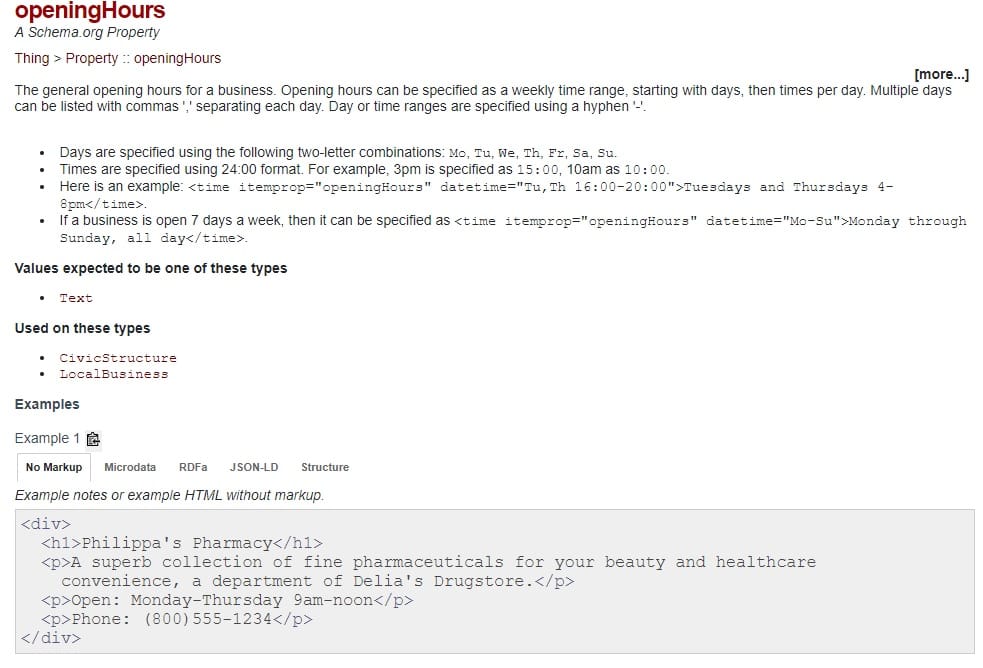
This, in turn, increases traffic to your site and improves the user experience. You can use various types of schema.org markup, such as those with information about businesses, people, reviews, articles, FAQs, breadcrumbs, recipes, events, and more, depending on the type of content you offer on your site.
7. Take care of brand reputation and online communication
Create an authoritative profile for the authors of your content, highlighting their expertise and experience. Participate in conferences and events in your field to build an offline presence. Respond professionally to comments and questions from readers.
Collect positive reviews and testimonials to increase user trust. Use Social Media to share relevant content and participate in industry discussions. Provide complete answers to the audience's needs. Be consistent in your online presence and communication.

8. Include the date within each article on the website
Demonstrate that the site is up-to-date and provides relevant and current information to users. Additionally, the date helps users assess the relevance of the information and understand if it's still valid.
This way, “adding the” date increases user trust in the website and improves its overall EEAT. And remember to update the date every time you make significant changes to the content.
9. Make sure “users can easily access” customer support and important information
If “users can communicate with you easily, you'll demonstrate commitment and transparency, increasing trust in your company. To do this, ensure that links for” customer support and pages with useful information are clearly visible in the navigation bar or website footer.
Use descriptive titles for these links so that users know what to expect when they click. Additionally, provide an intuitive guide or menu that helps users easily find the information they need.
10. Implement HTTPS certificate on the website
HTTPS encrypts data between the user's browser and the web server, ensuring that the exchanged information is protected from unauthorized access.
This security is crucial, especially if your site handles sensitive data or financial transactions. The presence of an HTTPS certificate indicates to users that your site is secure and that their personal information is protected.
This helps build trust between users and your website. Search engines, like Google, consider HTTPS as a positive factor for ranking websites.
A site with HTTPS is more likely to achieve a better position in search results, which can increase the visibility and reliability of the site.
Why E-E-A-T Is Essential for Educational Businesses
For educational businesses such as academies, online learning platforms, training providers, schools, and professional certification programs, demonstrating strong E-E-A-T (Experience, Expertise, Authoritativeness, and Trustworthiness) is crucial for both online visibility and student trust. Education-related content directly influences people's learning, career opportunities, and professional development, making credibility a key factor in how users and search engines evaluate educational websites.
Prospective students increasingly research institutions before enrolling in a course or program. They want to know who created the curriculum, what qualifications instructors possess, whether the information is accurate and up to date, and if previous students achieved meaningful results. Educational organizations that clearly showcase instructor credentials, industry experience, accreditation, student success stories, and transparent course information are more likely to earn trust and establish authority in their field.
From an SEO perspective, E-E-A-T helps educational websites demonstrate that their content is created by qualified professionals and provides genuine value to learners. Publishing expert-led articles, in-depth guides, original research, case studies, and practical learning resources can strengthen topical authority and improve visibility in search results. In today's AI-driven search landscape, search engines increasingly prioritize educational content that reflects real-world expertise, accurate information, and a proven track record of helping students achieve their goals.
By investing in E-E-A-T, educational businesses not only improve their search performance but also build stronger relationships with prospective students, increase enrollment confidence, and position themselves as trusted leaders in the competitive online education market.
Monitor and Continuously Improve Your E-E-A-T
Building strong E-E-A-T is not a one-time activity but an ongoing process that requires regular monitoring and optimization. As search algorithms evolve and AI-powered search experiences become more prominent, businesses must continually assess how their website, content, and brand are perceived by both users and search engines.
Start by using tools such as Google Search Console and Google Analytics 4 to track organic visibility, user engagement, content performance, and search queries. These insights can help identify opportunities to improve content quality, user experience, and topical authority. SEO platforms such as SEMrush, SEOZoom, Ahrefs, or similar tools can further support keyword tracking, backlink analysis, and competitive research.
Beyond traditional SEO metrics, it is increasingly important to monitor your online reputation and brand perception. Track brand mentions across the web, monitor customer reviews through review management platforms, and respond professionally to feedback. Positive reviews, industry recognition, media mentions, and expert citations all contribute to stronger E-E-A-T signals.
Businesses should also pay attention to entity and reputation tracking, ensuring that information about their brand, authors, products, and services remains accurate and consistent across websites, directories, social media profiles, and knowledge panels. These signals help search engines better understand and trust your organization.
Finally, as AI-powered search features continue to expand, consider monitoring your visibility within AI-generated search experiences and AI Overviews where relevant to your industry. Understanding how your content is referenced, cited, or surfaced in AI-driven results can provide valuable insights into your website's authority, trustworthiness, and overall digital presence.
By regularly measuring performance, maintaining a strong online reputation, and adapting to new search technologies, you can continuously strengthen your E-E-A-T and build long-term visibility, credibility, and trust.
Contact us if you want to leverage EEAT to grow your business
You've understood that EEAT (Experience, Expertise, Authoritativeness, and Trustworthiness) improves your website's visibility on Google and ensures user trust. Investing in EEAT “optimization” will not only improve your position in search results but also the public's perception of your company.
If you want to maximize the potential of EEAT for your business, we are ready to offer you a free consultation and personalized advice.
Together we will build an exceptional user experience, demonstrate your authority in your business sector, and gain the trust of your website visitors.