


Marketing automation education is the structured process of learning how to use software, data systems, and strategic frameworks to automate repetitive marketing tasks and improve customer engagement at scale. The field covers platforms like HubSpot, Mailchimp, and Salesforce Marketing Cloud, alongside concepts like lead scoring, behavioral tracking, and CRM integration. Professionals who invest in this training gain the ability to design workflows that generate real returns. Marketing automation delivers an average ROI of $5.44 for every $1 spent, with payback in under six months. That number reflects not just the technology, but the strategic competence behind it.
What is marketing automation education and what does it actually teach?
Marketing automation education, often referred to in the industry as marketing operations training, covers a defined set of technical and strategic competencies. The goal is not to teach you how to click buttons in a dashboard. The goal is to teach you how to think about customer behavior, data flow, and communication timing in a way that software can execute at scale.
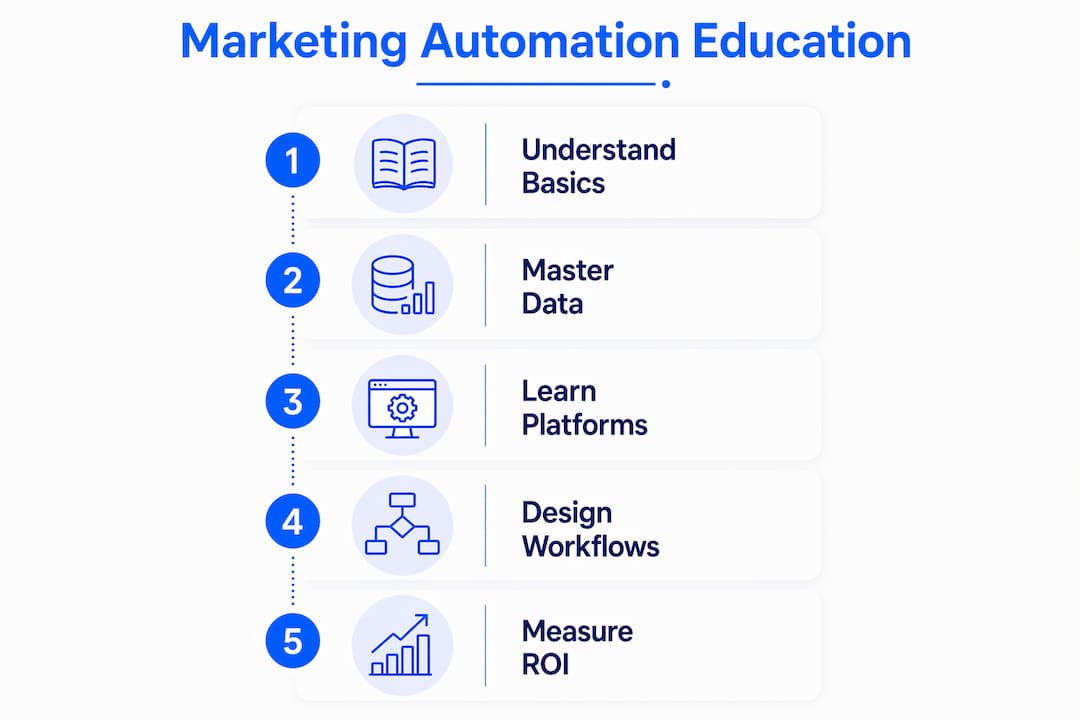
The core curriculum across most programs includes:
Most beginner programs, including those offered by Simplilearn and HubSpot Academy, cover these five areas before moving into advanced topics like multi-channel orchestration and predictive analytics. The distinction between beginner and advanced is usually not the tools used but the depth of data strategy applied.
Pro Tip: Master data orchestration before you master any specific platform. Knowing how to structure, clean, and route customer data is what separates marketers who get results from those who just send automated emails.

How do marketing automation courses compare in format and cost?
The range of available marketing automation training programs is wider than most professionals expect. Options span from completely free, self-paced certificates to multi-week paid university programs with formal credentials.
FormatExamplesCostDurationBest ForFree self-paced certificateHubSpot Academy, Mailchimp Academy$02 to 6 hoursBeginners and tool-specific learnersPaid professional certificateSimplilearn, Coursera$50 to $5004 to 12 weeksMid-level marketers seeking credentialsUniversity certificationContinuing education programs$500 to $3,0008 to 16 weeksProfessionals seeking academic credibilityOn-the-job trainingInternal programs, agency mentorshipVariesOngoingPractitioners in active roles
Marketing automation courses range from free self-paced certificates to paid university certifications, typically taking a few weeks to complete. This accessibility matters because it means a marketing coordinator and a VP of Marketing can both find a program calibrated to their current skill level and career goals.
Certification carries real weight in hiring decisions. Recruiters at SaaS companies and growth-stage startups increasingly list HubSpot or Salesforce certifications as preferred qualifications, not just nice-to-haves. The credential signals that a candidate can operate the tools and understand the strategy behind them.
What are the real-world benefits of marketing automation skills?
The practical payoff of understanding marketing automation goes well beyond sending scheduled emails. Automation software improves effectiveness by handling email marketing, social media posts, and campaign management, freeing marketers to focus on strategy and creative work. That shift in how time is spent is where the real productivity gain lives.
Professionals trained in marketing automation deliver measurable improvements across three areas:
The ROI case is well established. Marketing automation generates $5.44 for every $1 invested, with payback in under six months. This figure assumes the automation is built on a sound strategy, not just a sequence of generic drip emails.
Pro Tip: Build your first automated workflow around a single, high-value conversion event, such as a demo request or free trial signup. Optimize that workflow with A/B testing before expanding to other parts of the funnel. Complexity added before clarity is just expensive noise.
What challenges do learners face when implementing marketing automation?
Knowing the tools is not the same as knowing how to deploy them effectively. Several persistent challenges trip up even experienced marketers when they move from course completion to real-world implementation.
The most common misconception is that automation replaces strategy rather than multiplying its effectiveness. Marketers who automate without a clear customer-centric plan produce high-volume, low-relevance messaging that damages brand trust and inflates unsubscribe rates. Education addresses this by teaching strategic frameworks before platform mechanics.
Other challenges that thorough training specifically prepares you to handle:
The marketers who get the most from automation are not the ones who know the most platforms. They are the ones who understand data flow, customer psychology, and workflow logic well enough to catch problems before they reach the audience.
Key takeaways
Marketing automation education produces measurable results only when it combines platform proficiency with data strategy and customer-centric thinking.
PointDetailsEducation covers more than toolsCore curriculum includes lifecycle management, segmentation, lead scoring, and CRM integration.Course options are widely accessibleFree certificates from HubSpot Academy and Mailchimp Academy make entry-level training available to anyone.ROI is proven and fastAutomation returns $5.44 per $1 spent with payback under six months when strategy is sound.Data quality determines outcomesClean data and proper CRM integration are prerequisites for any automation to work as intended.Ongoing optimization is non-negotiableA/B testing and workflow refinement prevent audience disengagement and keep campaigns performing.
Why I think most professionals underestimate what this education actually requires
Most marketers approach automation training the way they approach learning a new social media platform: get familiar with the interface, run a few tests, declare competence. That approach produces mediocre results and a lot of frustration when campaigns underperform.
What I have seen consistently is that the professionals who extract the most value from automation are the ones who treat it as a discipline, not a feature. Data orchestration and behavioral tracking matter more than the mechanical ability to trigger emails. That insight changes how you approach the education entirely. You stop asking “which platform should I learn?” and start asking “how do I structure my data so that any platform can act on it intelligently?”
The second thing most people miss is that automation education is not a one-time event. The tools change, the channels shift, and customer behavior evolves. Marketers who completed a HubSpot certification in 2021 and stopped there are now working with a mental model that predates AI-assisted segmentation, predictive lead scoring, and multi-channel journey orchestration. Continuous learning is not optional in this field. It is the job.
My honest advice: prioritize programs that teach strategic frameworks over platform-specific button sequences. The frameworks transfer. The button locations change with every product update.
How Qreativa turns marketing automation knowledge into execution
Understanding marketing automation is one thing. Having a team that can build, deploy, and optimize it for your specific business is another problem entirely.
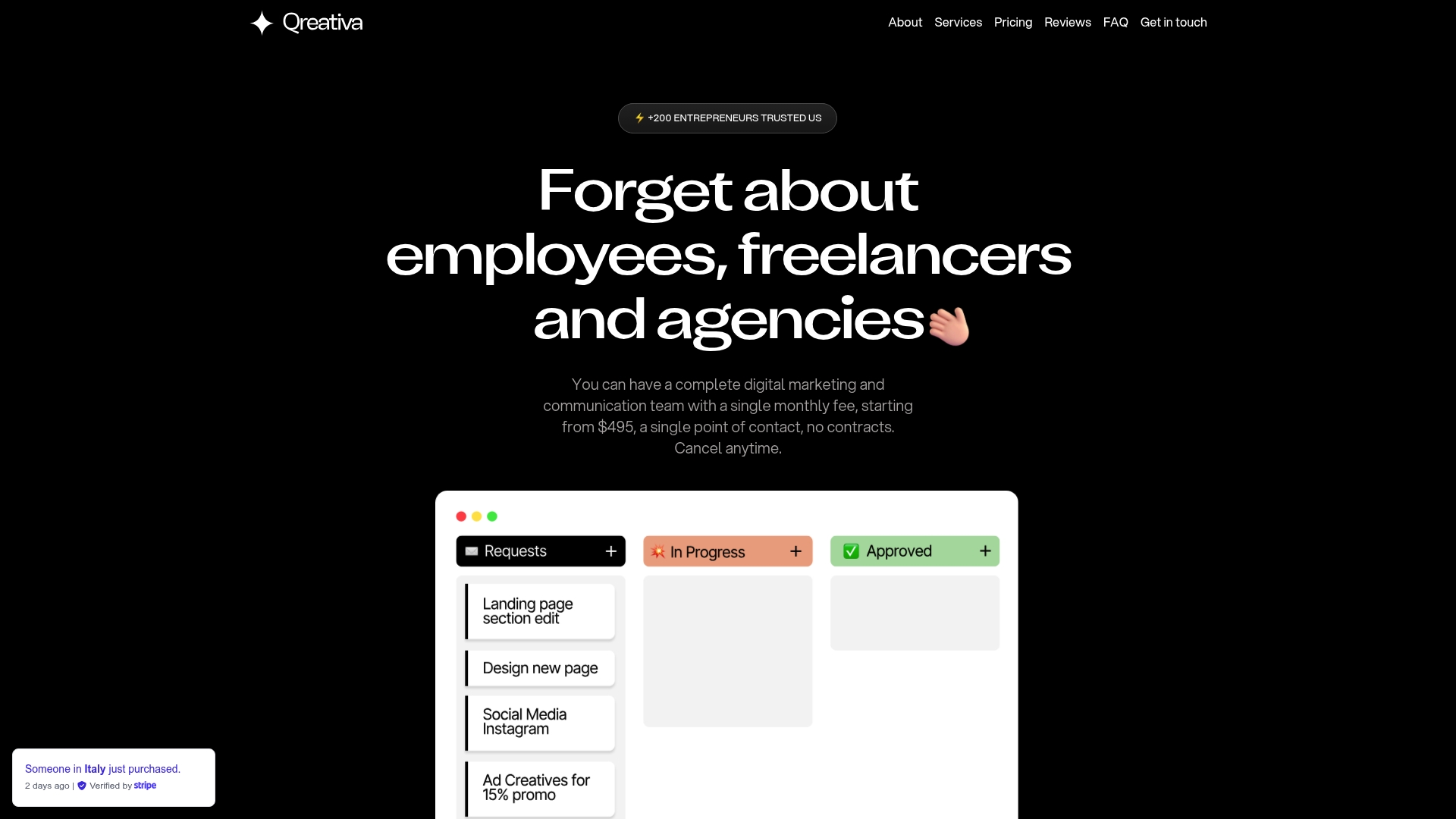
Qreativa is a subscription-based marketing and AI execution partner that handles the full automation stack for companies that do not want to hire, manage, or coordinate multiple specialists. From workflow design and CRM integration to AI-powered lead qualification and triggered campaign builds, Qreativa executes the work that most teams learn about in courses but struggle to implement consistently. If your business is ready to move from understanding marketing automation strategy to actually running it, Qreativa gives you a dedicated execution team without the overhead of building one internally.
FAQ
What is marketing automation education?
Marketing automation education is the structured training process that teaches professionals how to use automation software, data systems, and strategic frameworks to improve marketing efficiency and customer engagement. It covers platforms like HubSpot and Mailchimp alongside concepts like lead scoring, segmentation, and CRM integration.
How long does it take to complete a marketing automation course?
Most self-paced certificate programs take two to six hours, while paid professional certifications from providers like Simplilearn or Coursera typically run four to twelve weeks. University-level programs can extend to sixteen weeks.
What are the best marketing automation tools to learn?
HubSpot, Mailchimp, Salesforce Marketing Cloud, and ActiveCampaign are the most widely recognized platforms in marketing automation training programs. HubSpot Academy and Mailchimp Academy both offer free certifications tied directly to their platforms.
Do I need technical skills to start learning marketing automation?
No prior coding knowledge is required for most beginner marketing automation courses. The foundational skills are strategic: understanding customer lifecycles, segmentation logic, and data hygiene matter more than technical programming ability at the entry level.
What is the ROI of investing in marketing automation education?
The return compounds at two levels. Individually, certified professionals command stronger hiring consideration and higher salaries. At the business level, well-implemented automation returns $5.44 per dollar invested, with payback in under six months.